How to Improve Ankle Mobility (5 Simple Exercises That Work)
Mar 24, 2026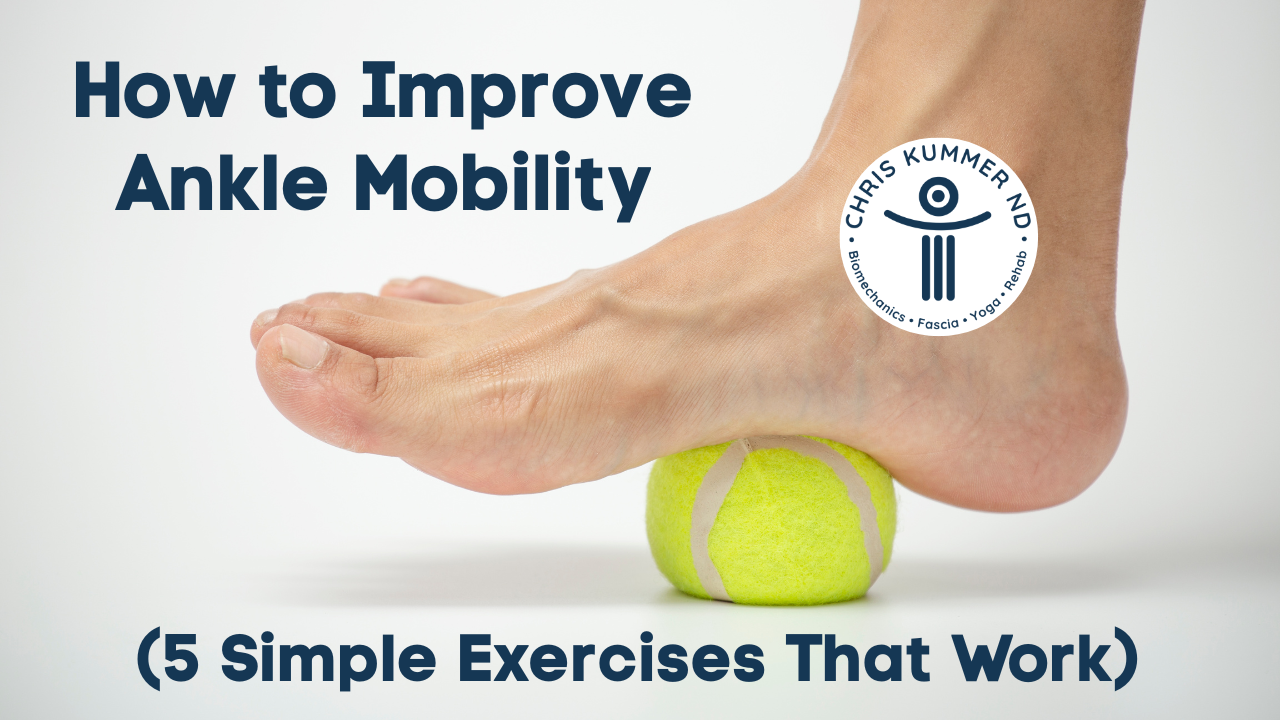
Ankle mobility is one of the most common—and most overlooked—limitations in movement.
If your ankles feel stiff, your squat feels restricted, or your balance is inconsistent, there’s a good chance your ankles are part of the problem.
The challenge is that ankle mobility is often addressed in isolation, with random stretches or quick fixes that don’t create lasting change.
In this article, we’ll break down what ankle mobility really is, why it matters, and give you simple, effective exercises that actually improve how your ankles move and function.
What Is Ankle Mobility?
Ankle mobility refers to how well your ankle joint moves—particularly your ability to bring your shin forward over your foot.
This movement, called dorsiflexion, is essential for:
-
Walking and running
-
Squatting and lunging
-
Balance and single-leg stability
-
Everyday movements like going up and down stairs
When dorsiflexion is limited, the body compensates.
You might notice your heels lifting in a squat, your knees collapsing inward, or your balance feeling unstable.
Why Limited Ankle Mobility Matters
Restricted ankle movement doesn’t just affect the ankle.
Because the body works as a connected system, limited mobility can lead to:
-
Increased stress on the knees
-
Reduced hip efficiency
-
Poor balance and coordination
-
Compensatory movement patterns
This is why ankle mobility is not just a flexibility issue—it’s a movement quality issue.
In fact, improving ankle function is one of the fastest ways to improve overall movement.
Mobility vs Stability (You Need Both)
One common mistake is focusing only on stretching.
But mobility without control doesn’t solve the problem.
Your ankles need:
-
Mobility → to access range
-
Stability → to control that range
Without stability, new range is unusable. Without mobility, stability becomes rigid.
This balance is explored further in this article on
why foot strength and ankle stability are the foundation of movement,
which explains how the foot–ankle system works as a whole.
5 Simple Exercises to Improve Ankle Mobility
These exercises are designed to improve both movement and control.
1. Knee-to-Wall Dorsiflexion
This is one of the most effective ways to improve ankle mobility.
How to do it:
-
Stand facing a wall
-
Place one foot a short distance away
-
Keep your heel down and gently drive your knee toward the wall
-
Move closer or further away to adjust intensity
Focus on:
-
Heel staying grounded
-
Smooth, controlled movement
2. Slow Calf Raises
This builds strength through range, not just at the top.
How to do it:
-
Rise slowly onto your toes
-
Pause briefly
-
Lower down with control
Why it works:
It strengthens the muscles that support ankle movement, improving both mobility and stability.
3. Ankle Circles (Controlled Articulation)
This improves joint awareness and control.
How to do it:
-
Lift one foot off the ground
-
Slowly move your ankle through a full circle
-
Keep the movement smooth and controlled
Focus on:
-
Exploring your full available range
-
Avoiding jerky or rushed movement
4. Split Stance Rocking
This connects ankle mobility to whole-body movement.
How to do it:
-
Step one foot back into a short lunge stance
-
Gently rock forward and back
-
Keep the front heel grounded
This integrates ankle movement into functional patterns like walking and lunging.
5. Light Dynamic Movements
Mobility needs to be usable.
Adding light, dynamic work helps your body apply new range.
Examples:
-
Gentle bouncing
-
Small hops
-
Skipping
These movements train the elastic properties of your tissues and improve real-world function.
Why Your Mobility Isn’t Improving
If you’ve tried stretching your calves and nothing changed, you’re not alone.
Common reasons include:
-
Only stretching, not strengthening
-
Not training control in new ranges
-
Ignoring the foot’s role in mobility
-
Lack of consistency
Mobility improves when the body feels safe to access and use new ranges—not just when it’s forced into them.
How This Affects Your Balance
Limited ankle mobility often shows up as poor balance.
If your ankle can’t move effectively, your body has fewer options to adjust.
This makes balance feel harder than it needs to be.
If that sounds familiar, this article on
why your balance feels unstable and how to improve it
breaks down how ankle function directly impacts stability.
Applying This to Yoga: Warrior 3
Ankle mobility plays a major role in single-leg balance postures.
In Warrior 3, the standing ankle needs to constantly adjust to maintain stability.
If mobility is limited or control is lacking, the body compensates—often by overworking the lifted leg or upper body.
This is why many people feel strong in the pose, but still unstable.
In this article on
the most common mistake in Warrior 3 and how to fix it,
you’ll see how improving ankle and standing leg function can completely change the posture.
How Often Should You Train Ankle Mobility?
Consistency matters more than intensity.
You don’t need long sessions—just regular input.
A simple approach:
-
5–10 minutes
-
4–5 times per week
Over time, small improvements add up to meaningful change.
The Bigger Picture
Ankle mobility is not just about getting more range.
It’s about improving how your body moves as a whole.
Better ankles lead to:
-
Smoother walking and running
-
Stronger, more stable balance
-
Reduced strain on other joints
It’s a small change with wide-reaching effects.
Where to Go Next
To build a complete system, combine mobility with strength and coordination.
Start here:
👉 Why foot strength and ankle stability are the foundation of movement
Then explore:
👉 Why your balance feels unstable (and how to fix it)
And apply it in practice:
👉 The most common mistake in Warrior 3
Final Thought
If your movement feels restricted, unstable, or inefficient, don’t just look at the obvious areas.
Start at the ground.
Because when your ankles move well, everything above them has a better chance to do the same.
Are you thinking 'yeah this makes sense to me'?
Most important now is to keep your movement practice up. Maybe you want to integrate. and try out what the blog post added to your ideas. Then add to your knowledge. Keep expanding. We are always changing - stay adaptable to make the most of all the situations of your life.
JOIN MY NEWSLETTER
Subscribe to get my latest movement related content by email.
Double opt-in, please click 'confirm subscription' in your email inbox
